The single densest source of confirmed GTA 6 gameplay detail is not a trailer. It is IGN's full transcript of its session with Rob Nelson, Rockstar North's head of development and co-studio head, published on October 7, 2026 under the title "GTA 6: The Big Interview". IGN was invited to the Edinburgh studio over the summer to watch the game played, ran its highlights in August, and then put the whole conversation online. Nelson played the game live while answering, which is why so much of it is specific.
This article collects everything he said, sorted by system. Where we quote, the words are Nelson's as printed by IGN. Where IGN or the outlets that reproduced the transcript paraphrase him, we say so. Nelson is a named Rockstar developer speaking on the record, so we treat all of it as confirmed, with one caveat he gave himself: the demo was, in his words, a tiny slice of the city.
Robberies: almost anything, and preparation matters
Robberies are the backbone of what you do between story missions. Nelson said you can "rob pretty much anything", not only designated stores, and in the demo he picked a headphone shop on impulse. He skipped setting up a getaway car to show what happens when you do not prepare: he found a safe, could have blown it at the cost of damaging the valuables inside, and ended up escaping through a rear exit with police gathering out front. "I should really be preparing for this robbery," he said mid-demo.
The transcript, as reported by Insider Gaming, spells out the trade-off the Extended Look only hinted at. Blowing a safe is fast but loud and can shrink the payout. Interrogating staff or finding the code is slower and pays more, and taking too long means police surround the building. Nelson's stated goal is that "anything where a mission can become systemic" should work the same way inside missions as it does in the open world.
The Heat system and getting away
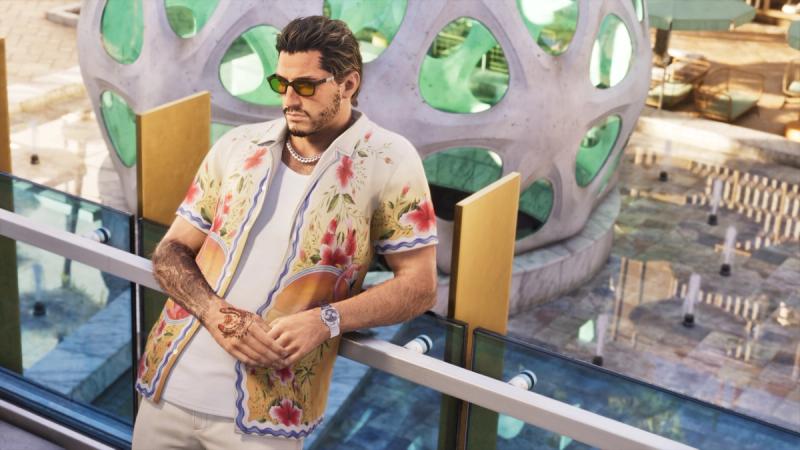
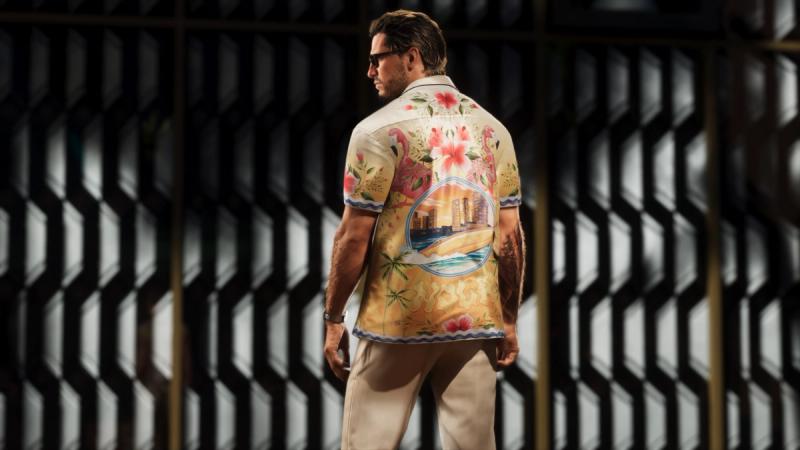
Police build a profile from your clothing, hair, vehicle and who you are with. Nelson's line on it: "Changing your hair will change your appearance, but the police will still know what you are wearing." Buying a new outfit clears heat; switching cars stops them tracking the old one; splitting Jason and Lucia up divides a pursuit that is looking for a couple.
He was blunt about the difficulty curve. "If you get three stars in the city, it can sometimes be challenging to get away in a vehicle," unless you have something very fast or a sports bike. His advice was to leave the streets: "Your best option is usually to do this," meaning on foot, into the alleys. Rockstar frames the whole thing as hit-and-run rather than mandatory shootouts, and your partner can drive while you shoot. "The partner can drive pretty well."
Two details worth filing for launch day: crimes are only reported if someone witnesses them or an alarm sounds, and getting arrested still produces the Busted screen and a respawn. A Focus mode, described in the transcript as similar to Red Dead Redemption 2's Eagle Eye, highlights nearby police.
Car theft is no longer one button
One-button hotwiring is gone. Newer cars have stronger barriers, and some parked cars are "not accessible to you until you get a bit further along", meaning tools unlocked through story progress. Carjacking a driver is always possible. The phone's scanner app shows a car's lock status, alarm, tracker, the gear you need, what a fence will pay and what it costs to register.
Trackers are the new tension. A stolen Infernus from a police impound in the demo had an advanced tracker that reported its position whenever the car slowed down, so Nelson had to keep his speed up. Damage matters too: "the car fence will give you less money for it if it's damaged."
Your personal vehicle can be summoned at any time and doubles as storage. Spare outfits live in the trunk, which matters once an outfit has been identified, and "all your weapons that you've purchased will always be available" from it. The old invisible arsenal is gone. Nelson's description of previous games: "You were the only one with an invisible arsenal hidden away."
Jason and Lucia: a relationship you maintain, or don't
The romance is optional and, Nelson said, "not something that we want to foist upon players". But it is not cosmetic: "whether you've nurtured the relationship or not will definitely have a bearing on how their story plays out." There is no direct gameplay reward for closeness, according to the transcript, only story consequences.
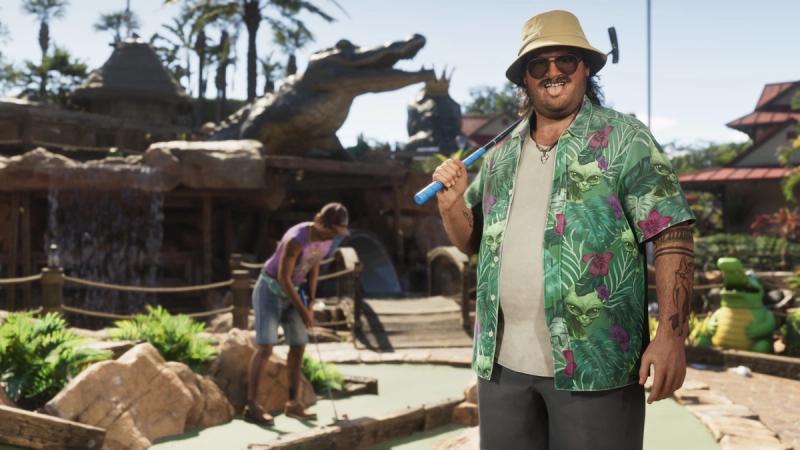
Maintenance is light-touch. The two can call and text at any time, and "all you need to do is respond"; ignoring messages "may impact your relationship a bit." Spending time together helps, whether that is kayaking, mini golf, pool or a bank robbery. Visiting the gym together trains both at once, "a 2-for-1 to manage their stats." Gyms build strength and overeating adds weight.
The character you are not controlling has his own life. "He has his own routine," Nelson said, and switching mid-demo found Jason in the shower. An unscripted encounter had Lucia meet a lawyer living in a dumpster, with options to give him pills, take legal advice or climb in. Hair can only be cut or shaved at safehouses, which Nelson described as "probably closer to the camps in RDR2" than the apartments of GTA V.
The world, the map and what it rewards
Streets are "narrower and more realistic in terms of scale", and traffic density makes driving a skill. Pedestrians react if you eavesdrop or follow them, some carry concealed weapons and will use them, and, in Nelson's words, "this world in GTA 6 is not like that" where "everyone would run in terror from you if you started acting out." A new Los Angeles-based team of writers, directors and producers was set up for NPC dialogue.
On scale, Nelson said what everyone quotes: "It's a big map, a very big map." He added something more useful: "The game is so big, I don't know that there's anybody on the team that knows all of it." Exploration is rewarded with location-specific salon and clothing items, wildlife you can study as a collection, and emergent jobs. His own example: Jason suggesting a job at an impound lot as they drove past, which Nelson had never seen before. "That was truly emergent for me."
He also drew a line against one Red Dead expectation. The world physically changing over time "is not included as much with this game."
Activities named in the session: kayaking, beach walks, zoo visits, scuba diving, parachuting, studying animals. Ryde Me, the rideshare app, works as fast travel, and you can sit through the whole ride. Snapmatic lets you follow and browse but not post, because the pair are "a couple on the run". "You just lurk." And yes: "There are more radio and in-game TV ads than ever before."
Missions and choices
Main missions keep cinematic control where the story needs it and add freedom everywhere else. A tower-block escape has several routes; "there is an optimal route that you're told to get out", and ignoring it turns the mission into a police chase. On the decision side, "there are lots of choices, big and small", and "the small ones add up to mean something." The Criminal Profile tracks consistent behaviour rather than single acts: "There isn't a right or wrong way to play this game, but consistent sorts of actions may have an impact."
On tone, Nelson said the team avoids satire that will age: "Very specific political issues or memes will date fast," and contemporary slang is kept in check for the same reason.
What this does not tell you
Nelson gave no numbers: no map size, no mission count, no download size, no performance targets. He did not discuss multiplayer, PC, or anything after launch. The demo was one district of Vice City, early in the story, which starts at Jason's small house. Everything above is confirmed as a mechanic that exists; how deep each one goes is what November 19 is for. His closing line in the transcript was the right summary: "it's still very much Grand Theft Auto."